
Commercial Affordability
Supporting Commercial Affordability and Local Businesses
Commercial affordability is a key challenge for local businesses. This research worked with a consortium of partners, including developers/property owners, municipalities, Business Improvement Areas and associations to identify models, tools, and strategies that can work for all stakeholders.
Key Takeaways:
- Affordability is systemic, driven by many factors, including taxes, costs, financing and regulation.
- The market alone does not deliver affordability.
- There are proven models we can follow.
- Education and buy-in are needed.
- The best solutions work for all stakeholders.
- We identified models in the following categories: public sector and regulatory approaches, developer-led affordability and stewardship practices, cultural, arts and legacy business protection, temporary and transitional activation strategies, financial tools, and ownership models.
Download the Supporting Commercial Affordability and Local Business Report.
Economic Impact of Local Businesses
 Small Business, Big Impact: Small Retailers' Local Contributions
LOCO worked with the Canadian Federation of Independent Business (CFIB) to assess the economic impact of B.C.’s independent retailers. The full report contains data for all of Canada; our summary focuses on the results for B.C.
Key Takeaways:
- B.C. independent retailers recirculate 66% of their revenue within the province (the 2nd highest rate in Canada) compared to Multinational Corporations (MNCs) with physical stores in Canada (11%) and large online platforms with no retail stores (8%)
- 83% of B.C. consumers feel it’s important that the money they spend is redistributed in their communities
- Consumers underestimate the amount that local businesses recirculate by almost 1/2, while also overestimating the amount that MNCs and online platforms do by up to 3.4 times.
Download the Small Retailers' Local Contributions Report (Canada-wide), or The Economic Impact of B.C.'s Independent Retailers Report (B.C. results).
 The Economic Impact of Local Businesses
This 2019 research measured the economic impact of independent restaurants and retailers compared to multinational corporations (MNCs).
Key Takeaways:
Local businesses:
- Recirculate 63% of revenue in B.C. compared to 14% for MNCs, creating 4.6 times the impact
- Produce 8.4 times the jobs and 8.1 times the revenue/ft2 than MNCs
- Spend up to 31.4% of their revenue on B.C. products & services
- Donate 24 times per dollar of revenue to local charities compared to MNCs
- A 10% shift in B.C. consumer spending to local creates 14,150 jobs & keeps $4.3 billion in the B.C. economy.
Download The Economic Impact of Local Businesses Report.
 The Power of Purchasing: The Economic Impacts of Local Procurement
In 2013, LOCO partnered with the Columbia Institute and UBC Sauder Centre for Social Innovation and Impact Investing to produce a companion report to The Power of Purchasing for institutions seekingby local businesses than by strategies to source local within the framework of Canadian and Provincial free trade agreements.
Key Takeaways:
- Locally owned suppliers re-circulate 33% of their revenue, compared to 17% and 19% for their multinational counterparts.
- There is a 77%-100% economic advantage from buying local and an 80%-100% increase in jobs per million dollars spent.
- The increase in recirculation is due mostly to greater employment by local businesses compared to multinationals.
- Local governments and school districts spend $6.7 Billion/year on purchasing, an amount which can and should be leveraged to support the local economy.
Climate Benefit of Local Shopping
The Impact of Shopping Local: An Economic and Carbon Analysis of 5 Common Purchases.
LOCO and Vancity teamed up to measure the impact of 5 common purchases - a loaf of bread, a caffe latte, blueberries, a dress, and a bicycle - from local businesses compared to imported products from non-local businesses. We worked with Offsetters and Civic Economics for the carbon and economic analysis.
Key Takeaways:
- Locally grown or made products result in a greenhouse gas reduction benefit of between 5% and 66% compared to imported products
- Local products produce a local economic benefit between 2.0 and 7.1 TIMES that of imported products (an average of 4.1 times),
- A local retailer has a local economic benefit of 107 TIMES that of a non-local retailer that is purely online
Download The Impact of Shopping Local Report. Check out the infographics.
Policy Changes & Red Tape Reduction
 Report on Local Business Closures
We tracked local business closures from 2024 to 2025 following our 2024 report on the high cost of doing business, which anticipated closures due to high costs.
Key Takeaways:
- 257 businesses publicly reported closures in 2024 and 2025, mostly restaurants in the Greater Vancouver area
- Financial conditions were the top reason for closure, followed by personal or family reasons, and lease and landlord issues.
- The City of Vancouver tracked the closure of ~3,000 businesses since 2020, 820 in 2024
- Longstanding community favourites like Floata Seafood Restaurant (30 years), Cartems Donuts (14 years), and Virtuous Pie (10 years) have closed, indicating that longevity does not guarantee survival in current market conditions.
Download the Local Business Closures Report.
 The HIGH COST of Doing Business in Vancouver
This 2024 research investigated the cost of doing business to successfully advocate for capping property tax at the rate of inflation in 2025 in the City of Vancouver.
Key Takeaways:
- 2/3 of businesses in Vancouver report they can't last more than four years; 7% more than in the rest of B.C.
- Top costs are payroll, cost of goods sold (COGS), insurance, property tax, lease costs, and business fees
- Many cost increases are those that businesses have little control over
- Cost per employee has risen 69% (33% as a percentage of revenue)
- Building costs are rising due to property taxes, lease costs and insurance increases
- Shrinking margins are inhibiting business owners' ability to profit and pay themselves.
Download The High Cost of Doing Business in Vancouver.
 The HIGH COST of Permitting Delays in the City of Vancouver
This 2020 research quantifies the economic impact of permit and license delays in the City of Vancouver. Many changes are underway to improve the process at the City of Vancouver, and this report provides recommendations on the economic benefit of those changes.
Key Takeaways:
- Average of 8.2 months from application to permit/license issuance
- Cost to the business = $513,390 (lost revenue and leasing costs)
- Cost to the broader local economy = $208,418
- Total cost of the average delay = $721,808
- Each week that City can reduce delays saves $31,160
Download the High Cost of Permitting Delays Report. Get the infographics from our blog.
 Principles for Local Business Resilience and Recovery
The COVID-19 crisis has amplified the understanding of the key role that small and local businesses play in their communities and the B.C. economy. As the pandemic exposed the disparities in our economic system, it also highlighted the need for a “new normal”, an imperative to build back to a more just and equitable economy. As part of this effort, LOCO recognized the opportunity to help shape a vision for rebuilding the economy to focus on increasing local business resilience and a strong recovery for the sector. We set out to develop a framework based on key principles to support local business resilience and recovery, in the hopes of supporting local businesses in a more strategic way. The goal of this work is to start to define key principles as a starting point for follow-on activities to promote, pilot, and implement solutions. They are by no means hard and fast rules; we hope that this is the beginning of an iterative process, informed by many.
Download the Principles for Local Business Resilience and Recovery Report.
Buying Local: Tools for Forward-Thinking Institutions
LOCO BC companion report for The Power of Purchasing report to support institutions with strategies to source from local suppliers within the framework of Canadian and Provincial free trade agreements.
Key Tools:
- Define Local
- Work with large suppliers to localize supply chains
- Tailor RFPs to local businesses, and advertise bids more widely
- Unbundle large contracts
- Score bids for social value, sustainability goals, and diversity suppliers
- Move toward “total cost” (full value) procurement
Download the Buying Local: Tools for Forward-Thinking Institutions Report.
Consumer Local Preferences & Online Shopping
 Support for Local Online and In-Store
LOCO BC research on consumer patterns and preferences post-COVID-19 restrictions and amid record-high inflation. We surveyed more than 850 Canadians and found that local businesses still dominate in-store purchasing, but non-local purchasing dominates online. We estimate the annual leakage of Canadian consumer spending to foreign-owned multinationals in BC alone at $53 Billion, and in Canada at $389 Billion. We found that many consumers make local product purchases at multinational corporations. Although price is a key consideration, we found that product quality, better service, and availability were extremely important to them, all areas in which local businesses can really shine. With a focus on digital adoption in small businesses during/since COVID-19, there is an opportunity for local businesses to capture more of the market online with better support for e-commerce systems and digital marketing, and better consumer education.
Key Takeaways:
- Local businesses are still dominating in-store purchasing, capturing 56% of spending
- Non-local purchasing dominates online purchasing, capturing 54% of spending
- Consumers make purchases of local products at multinationals - 20% often, and 55% sometimes
- Annual leakage to multinationals from consumer non-local purchasing in BC alone is estimated at $53 Billion; in Canada, leakage is $389 Billion
Download the Support for Local Online and In-Store Report now.
 The Impact of Online Shopping on Local Business
LOCO BC research highlights the increase in online shopping, how BC businesses compete online, and what motivates online shoppers. Online shopping will grow to 10% of all Canadian consumer purchases by 2019. Purchasing with local businesses supports a strong local economy, and yet only 1/3 of online sales go to Canadian businesses. And the more shopping consumers do online, the more likely they are to buy from big chains rather than local businesses. Consumers report that they value Canadian ownership and look for locally made products online, but most small businesses don’t market themselves online.
Key Takeaways:
- Online shopping sales in Canada will reach $40 Billion by 2019
- 2 out of every 3 dollars spent online by Canadians goes to a U.S. retail website
- Cross-border online shopping reduces the amount of money circulating in the local economy by up to 32%
- 69% valued Canadian ownership as “Most Important” or “Important” when shopping.
- 50+% of consumers are seeking locally made products
- Very few small businesses are ready to compete online
- Consumers would spend more money online with local businesses if they offered convenient shipping, e-stores and a better consumer experience navigating their online stores
Download the Impact of Online Shopping on Local Business report now.
Legacy Business & Neighbourhood Support
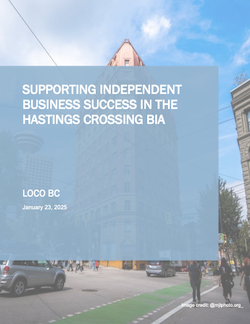 Supporting Independent Business Success in the Hastings Crossing BIA
LOCO BC was commissioned by the Hastings Crossing Business Improvement Association (HxBIA) to research the challenges and opportunities for businesses in the area, and identify strategies to support them, and fill empty spaces with independent businesses. We reviewed best practices in other cities (New York, Boston, Seattle, San Francisco, etc.) to learn the challenges and successes of other areas. We developed case studies of several successful independent businesses in the area and reviewed available commercial spaces. Finally, we identified the enhanced economic development role the HxBIA can play in supporting business establishment, development, and growth.
Download the Supporting Independent Business Success in the Hastings Crossing BIA report.
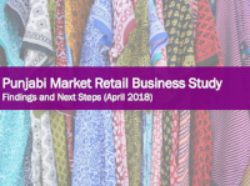 Punjabi Market Retail Business Study for the City of Vancouver
LOCO BC worked for the City of Vancouver to study retail in the Punjabi Market area. The Punjabi Market community plays an important part in Vancouver's history and culture, but many of the area's iconic South Asian businesses have relocated to the Surrey/Delta area or been displaced by new development. LOCO assessed the vacancy rate, commercial building stock, and state of retail over time, reviewed local/nearby planning and development, developed a retail strategy, and engaged area stakeholders.
Download the Punjabi Market Retail Business Study findings and next steps
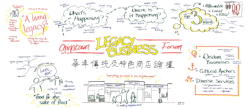 Legacy Business Research for City of Vancouver
LOCO BC worked for the City of Vancouver to study the loss of businesses of historic importance to the City, especially in Chinatown. We assessed the viability of implementing a Historic Preservation Program like the City of San Francisco, drafted a "heritage business" definition, engaged key stakeholders and researched municipal tools to protect key businesses.
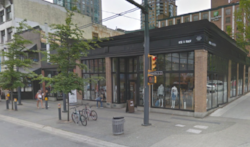 Empty Storefronts & CED Approaches to Revitalization for Downtown Van
LOCO BC worked for the Downtown Vancouver Business Improvement Association (Downtown Van-DVBIA) contracted LOCO to research Community Economic Development (CED) solutions to empty storefronts on Granville Street. We engaged leasing agents and area businesses, and investigated revitalization tools most likely to support the growth of independent businesses in the area. We made recommendations about the role the DVBIA should play in the area's economic development that helped form an action plan for the organization's new Ec/Dev Officer. We also produced several case studies highlighting the success of independent businesses in the area to encourage other trailblazing businesses to consider locating there.
LOCO BC Sponsors